
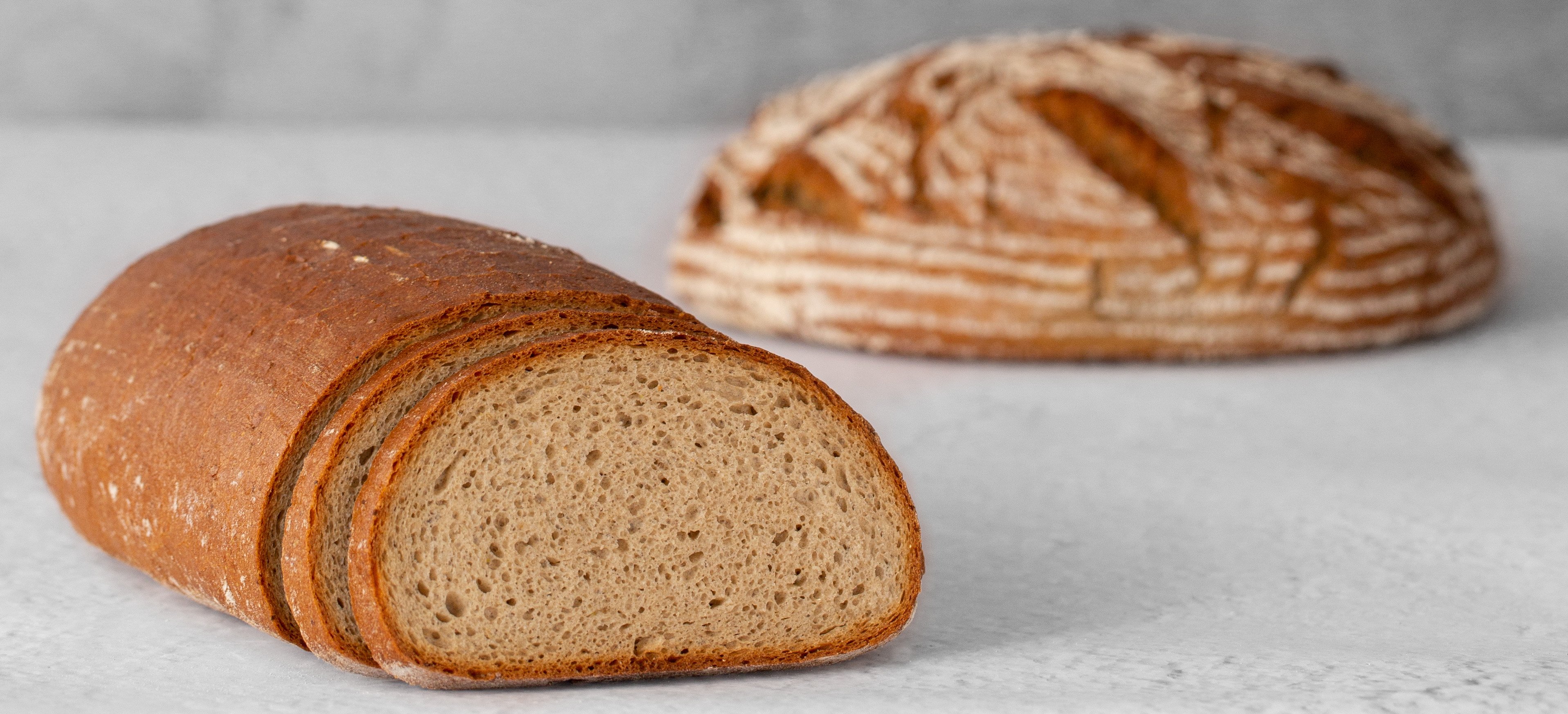
Rye sourdoughs
Baked goods made from rye flours are traditionally produced mainly in Germany, Austria, Czechia, Poland, and partly in France, the Netherlands, or Switzerland. Rye breads are also popular in Scandinavia, the Baltic States, Russia, Belarus, and Ukraine. Rye milling products with various extraction rates and type numbers are used.
The rye flour content ranges from 10 to 100 %.
Rye milling products differ from wheat milling products due to higher enzyme activity and greater water absorption. In recipes with a high rye content, this can lead to increased starch breakdown during baking. The consequences are an unstable and overly moist crumb structure, as well as flat breads with low volume. To ensure the baking suitability of rye milling products, a portion of the rye used is traditionally made into sourdough. The acids formed during sourdough fermentation inhibit the starch-degrading enzymes and ensure a stable crumb structure. Furthermore, the use of sourdough enhances the flavour, aroma, and freshness of baked goods. Over the past decades, the quality of rye flour has changed significantly. Through breeding and development of rye varieties, enzyme activity has decreased, rye starch has become more compact and less susceptible to enzymatic attack. Grain damaged by sprouting is increasingly rare; the current discussion around rye flour focuses more on dry-baking flours and achieving good bread freshness. By using combined dough processes (operational sourdough and dried sourdough or dough acidifiers) as well as modern bread improvers, it is still possible to produce high-quality breads with a high rye content and excellent freshness.
Definition of sourdough
Common definitions can be found, for example, in the Austrian or German Food Codex.
Sourdough is a dough made from milling and bran products, starter and drinking water, possibly with the addition of leftover bread, produced mainly by lactic acid fermentation. Preservation of sourdough by drying or thickening is permitted.
(Source: Austrian Food Codex, IV Edition, Chapter B 18 / Bakery Products)
Sourdough is a dough whose microorganisms (e.g. lactic acid bacteria, yeasts) from sourdough or sourdough starters are in an active state or can be reactivated. After the addition of cereal products and water, they are capable of continuous acid formation.
(Source: German Food Codex, Guidelines for Bread and Small Baked Goods)
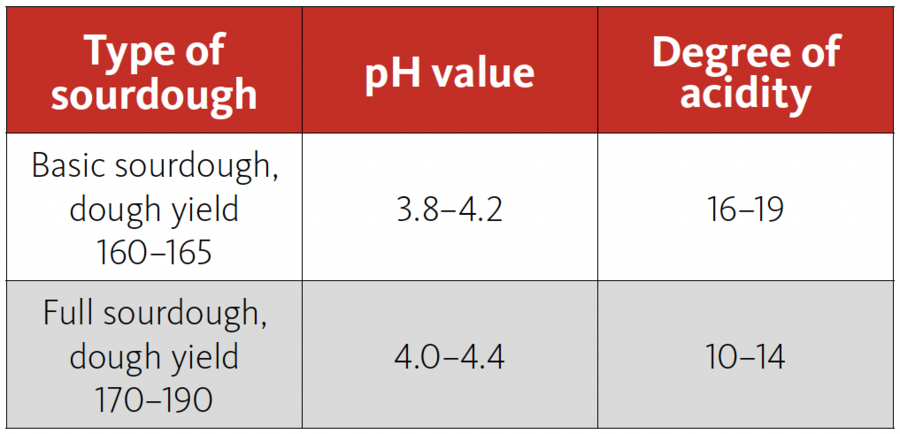
Depending on the rye content in the recipe, a corresponding amount of acid must be used to ensure stable and sliceable breads. To gauge the acid present in the sourdough, the pH value and acidity level are measured.
The pH value describes the strength of an acid, while the acidity level determines the quantity of acid. The following table shows exemplary pH values and acidity levels of various sourdoughs.
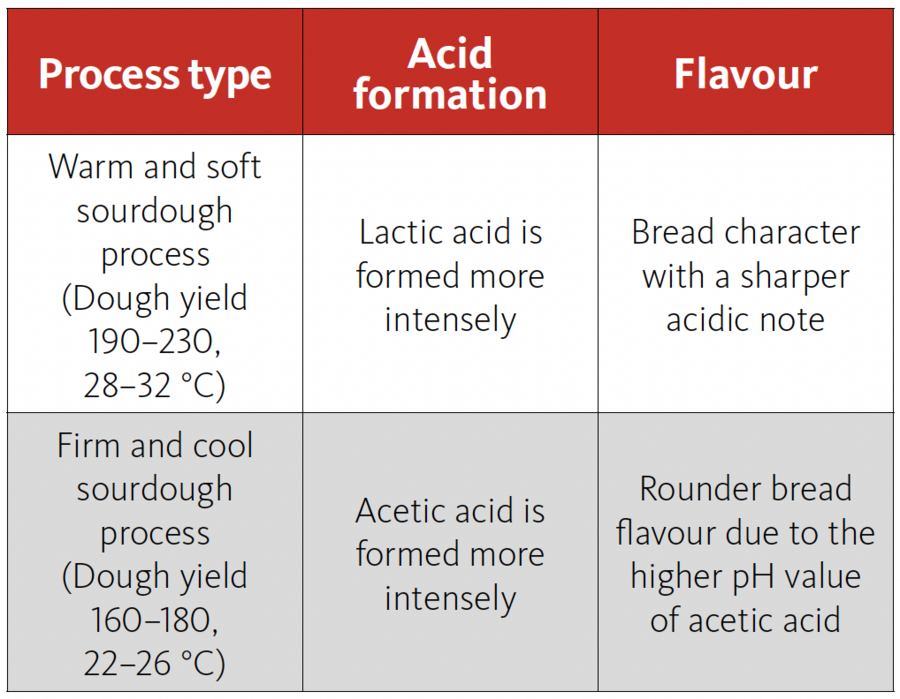
The main acids present in sourdough are lactic and acetic acid, produced by lactic acid bacteria during sourdough fermentation. Depending on the sourdough process, more lactic or more acetic acid is formed.
Typically, a lactic/acetic acid ratio of 80/20 is aimed for to achieve a balanced bread character. A firm basic sourdough process generally results in breads with more acetic acid and a rounded bread flavour. Acetic acid is more volatile than lactic acid and has a smaller molecular size, making it more perceptible olfactorily.
If sourdough is produced via a sourdough system, it must be pumpable, which requires dough yields of around 220. This softer process produces more lactic acid, and the resulting breads have a sharper, more intense acidic note, as lactic acid has a lower pH value than acetic acid. The table describes the influence of process parameters on acid formation.
The traditional three-stage sourdough process combines both a firmer and a softer sourdough stage, resulting in the most balanced flavour. Additionally, the three-stage process promotes sourdough yeasts, which further enhances leavening power. However, it is also the most complex process with the greatest potential for error.
A bakery’s own sourdough process is a source of pride for every bakery business. In practice, a one-stage basic sourdough process is often combined with the addition of dried sourdough or a dough acidifier (combined sourdough process). This allows the bakery to flexibly respond to fluctuations in sourdough or increased demand. If the acidity level in the sourdough is too low, it can be compensated with dried sourdough or dough acidifier. This also allows for larger reorders of bread varieties when the sourdough was already produced the day before.
Another option is the production of rye pre-doughs with the addition of dried sourdoughs or dough acidifiers. This stabilises the pre-doughs and enables pre-swelling without the need for continuous monitoring of pH and acidity. Crumb elasticity, bread shape, and aroma development are improved as a result.
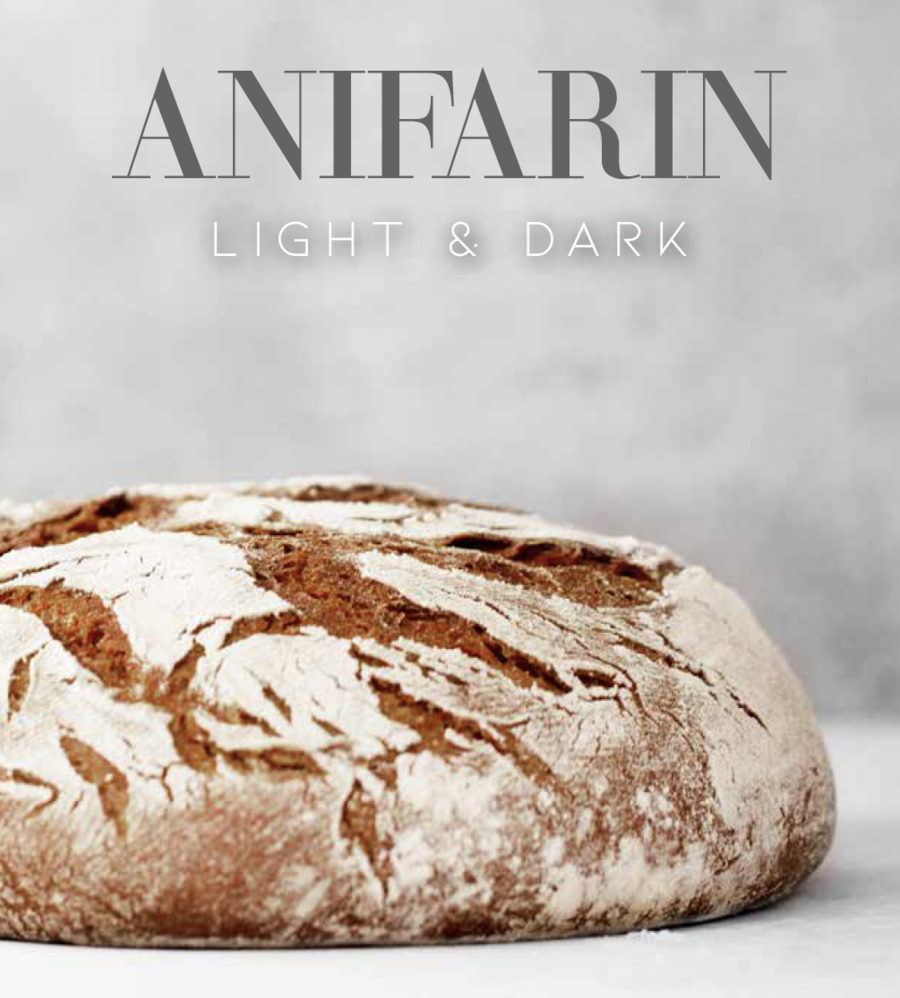
Powdered dough acidifiers such as Anifarin dark (1240) and Anifarin light (1245) offer the advantage of very low dosage. They also contain acetic acid for a balanced bread flavour. BAS® dark (1250), BAS® light (1251) and BAS® special (1249) are based on multi-stage sourdough processes and contain sourdough-specific aroma compounds to achieve an aromatic, rounded bread flavour. The dried rye sourdoughs BAS® T (1253) and BIO-BAS® T (1324) are easy to dose and offer the advantage of being declared as "sourdough".
The table shows the parameters of sourdoughs and dough acidifiers.
Jan Ronniger
Product Development
jan.ronniger@backaldrin.com